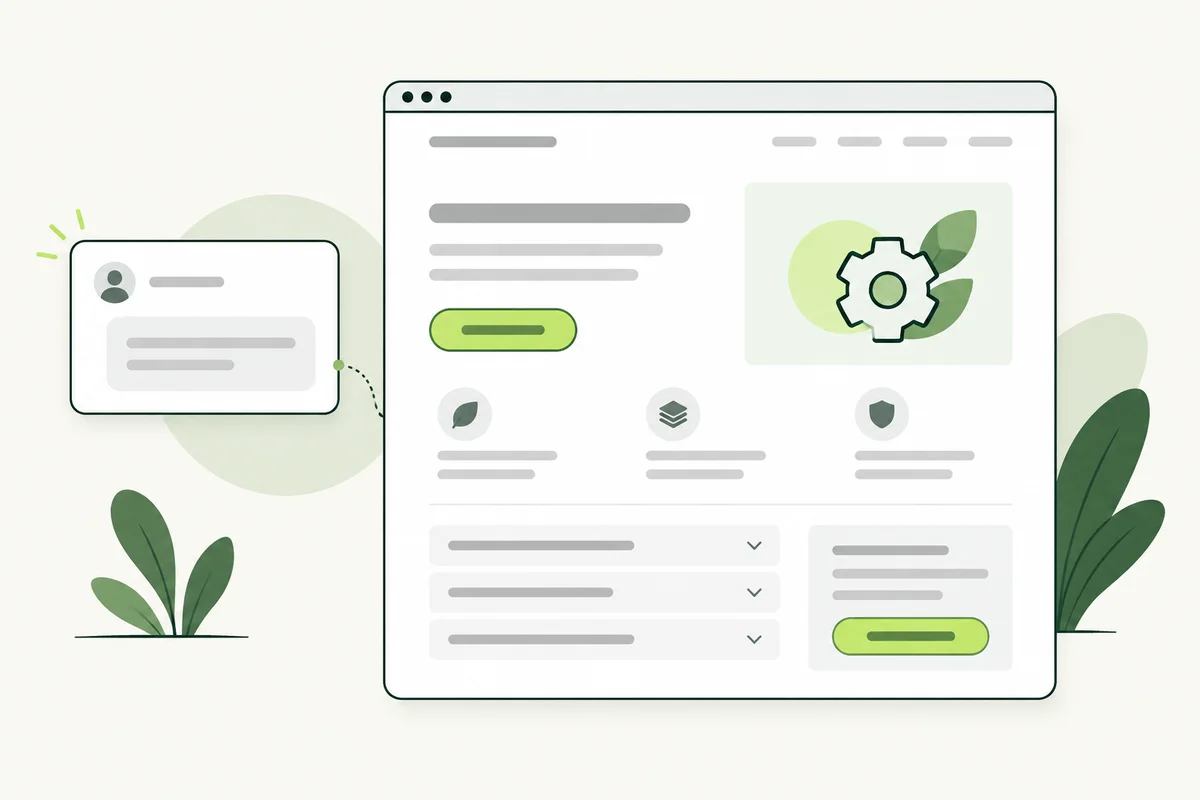
A potential customer arrives on your service page with practical questions: can you help, what is included and how do they get started? Put those answers where they are easy to find, before asking the visitor to read a long company introduction.
This checklist concerns the content of an individual service page. For assigning topics across the whole website, use our keyword mapping guide.
State the service and who it is for
Use the opening section to name the offer, intended customer and relevant location or coverage. Explain unfamiliar terminology. If you serve only commercial premises or require a minimum project size, make that clear where it affects suitability.
For example, a office cleaning business, “cleaning solutions for everyone” is less informative than an accurate explanation of the premises, tasks and areas it serves. Specificity should come from real operations, not a collection of popular search terms.
Explain the scope and important exclusions
Describe what customers receive and what requires a separate discussion. Concrete tasks are easier to assess than phrases such as “complete solutions”. Include exclusions when they prevent a common misunderstanding, but keep the wording readable.
If pricing depends on site conditions or project size, explain which details are needed for a quotation. Do not invent a starting price merely to fill a section.
Show the process from the customer’s perspective
Outline the meaningful steps: what information the customer provides, what assessment takes place, what happens during delivery and what follows. State time commitments only where your business can support them.
The visitor needs to picture their involvement. Internal software names or team handoffs rarely help unless they explain something the customer must do.
Use evidence you can substantiate
Relevant project photographs, accurately described experience or genuine customer feedback can answer practical questions. Obtain appropriate permission and represent the evidence honestly. A generic illustration can explain a process, but should not be presented as a photograph of completed client work.
Google’s helpful-content guidance encourages useful, trustworthy information for the intended audience. Treat evidence as information that supports a decision, not decoration around an unsupported claim.
Answer the questions that block an enquiry
- Is this service suitable for my type of business?
- What information do you need from me?
- What is included and what is separate?
- How does the process begin?
- Where can I find further details?
Use actual sales questions to decide which answers belong on the page. If a topic needs a full guide, provide a helpful summary and an internal link rather than repeating the entire guide.
Make the next step clear
Tell visitors what to submit and what the enquiry is for. Ask for information your team uses, and check the form works. The call to action should follow naturally from the service explanation.
Before publishing, read the page on a small screen. Check the title tag, heading and introduction promise the same service. Remove repetition and keep the facts that help a suitable customer make an informed choice. There is no universal word count that replaces that judgement.