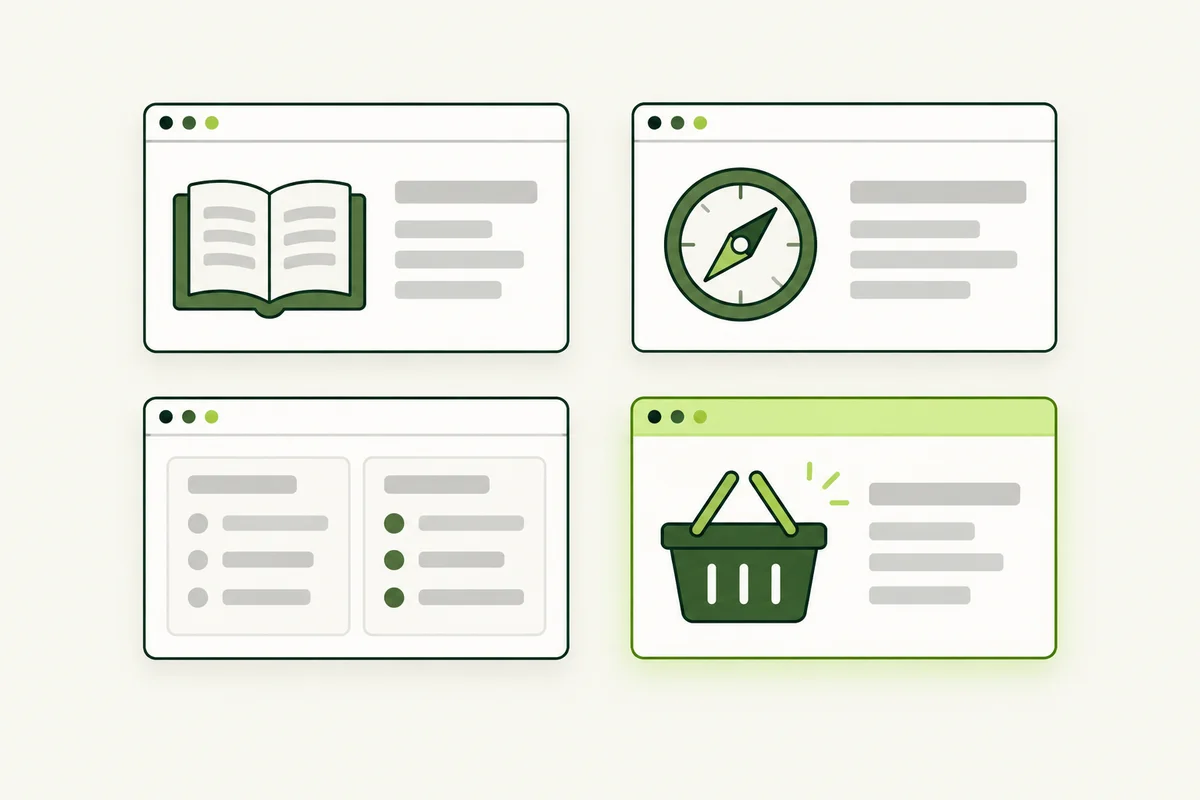
Someone searching for “office cleaning prices” needs a different answer from someone searching for “how to clean an office carpet”. Search intent is the need behind that search. Understanding it helps you decide whether to write a guide, explain your service or help someone compare options.
Decide what the visitor needs before choosing the page format or writing the first heading.
Four useful ways to describe intent
These categories are a practical shorthand. A real query can combine more than one need, so use them to clarify your thinking rather than force every phrase into a rigid box.
- Informational: the person wants to learn, solve a problem or understand a term.
- Navigational: they want a particular business, website or page.
- Commercial investigation: they are comparing options before choosing.
- Transactional: they are ready to buy, book, request a quote or take another action.
For example, “what is office carpet cleaning” suggests an explanation. “Steam cleaning vs dry carpet cleaning” suggests a comparison. “Office carpet cleaning quotation” suggests a service enquiry.
Start with the task, not just a keyword modifier
Words such as “how”, “price” and “near me” provide clues, but they do not settle the question on their own. Someone searching for a price may want a fixed product cost, a package comparison or an explanation of what affects a quotation.
Write a simple sentence: “After reading this page, the visitor should be able to…” Complete it with a real outcome. If the answer contains several unrelated tasks, you may be combining topics that need separate pages.
Review the result formats
Search the phrase in the language and market you serve, then inspect the prominent page types. Are they practical guides, product categories, service pages, comparison articles or local listings? Read enough of the pages to understand the question they answer, rather than copying their headings.
Results can vary by location, time and context. Treat them as evidence to consider alongside customer questions. Where results are mixed, decide which need your business can address well and make that purpose clear.
Match the content and next step
A useful informational guide should answer its main question before asking the reader to enquire. A comparison should explain meaningful differences, who each option suits and any limits to the comparison. A service page should explain what is offered, relevant coverage, the process and how to make contact.
Suppose a business provides commercial cleaning in Petaling Jaya. Its maintenance guide could explain scheduling considerations, while its service page covers the actual work available. The guide can link to the service page when the reader is ready. It does not need to turn every paragraph into a sales pitch.
Use a short page brief
- Visitor: who is likely to be searching?
- Task: what do they need to understand or do?
- Format: which page type can fulfil that task?
- Essential information: what must the page explain before the next step makes sense?
- Next step: read a related guide, compare plans or send an enquiry.
This keeps the brief distinct from keyword research, which finds potential topics, and keyword mapping, which assigns those topics to URLs.
Check whether the finished page keeps its promise
Read the title and opening together. Do they describe the same task the body actually answers? Remove claims that the content cannot support. If the page attracts impressions but few relevant enquiries, review both the intent and the page experience; the keyword alone may not explain the outcome.
Google's people-first content guidance encourages content that serves an intended audience and helps readers achieve their goal. Use that as a final editorial check: would this page still be useful if someone reached it without a search engine?