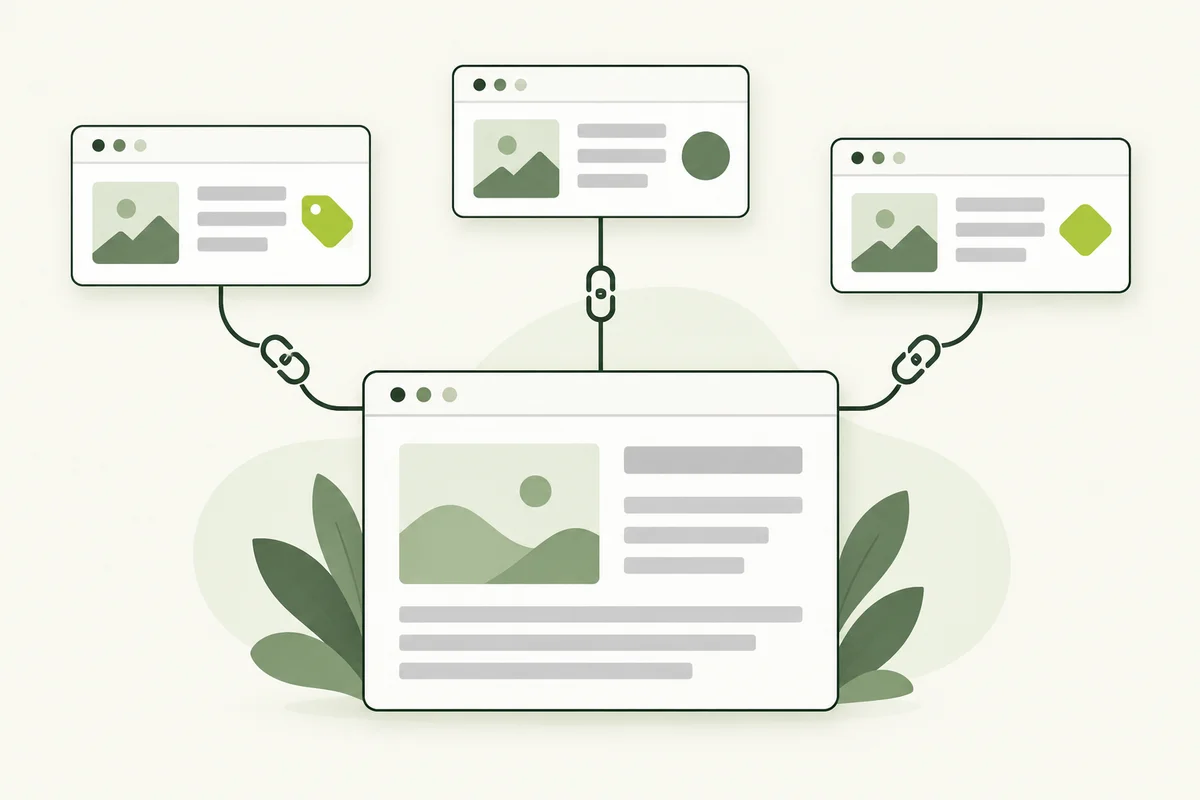
You may see links described as “nofollow”, “sponsored” or “UGC” in a report. These labels describe a relationship in the link’s HTML. They are separate from the words you click and usually do not change how the link looks to a visitor.
Understanding the vocabulary helps you ask a publisher a clear question. It does not turn a single label into a complete assessment of an article or its value to a reader.
What the three labels describe
Google recommends sponsored for advertisements and paid placements, including links provided in exchange for compensation. UGC describes user-generated content such as comments or forum posts. Nofollow applies when the other labels do not fit and you do not want Google to associate your site with, or crawl the linked page from, that link. Google also accepts nofollow for paid links.
More than one value can appear on a link. These labels do not guarantee that the destination stays undiscovered: it may be found through other links or sources. See Google’s outbound-link qualification guidance for the implementation details.
“Dofollow” is informal terminology
People often use “dofollow” to describe an ordinary link without these qualifying labels. It is not a special attribute you need to add. Ask what is actually present in the HTML rather than relying on a shorthand description in a sales message.
Keep that question separate from anchor text, which is the wording the visitor clicks. Changing the wording and changing a relationship label are different edits.
Ask about the publishing arrangement
Consider a company paying for a clearly identified promotional feature. The useful conversation is about the arrangement, how it is represented and how the publisher qualifies links. Asking only whether a link is “followed” misses that context.
Likewise, a customer posting a website address in a discussion forum is different from an editor choosing a reference in an independently written guide. The publication process matters when interpreting the label.
Check what was published
- Open the article and confirm the link reaches the intended page.
- Ask your developer or publisher to inspect the link’s rel values if you need technical confirmation.
- Compare the published result with the agreed service scope.
- Keep a record of the URL and review date, because a page can change.
A tool’s label is a starting point for discussion. If two tools disagree, inspect the actual link and the page version they examined. Avoid concluding that a link has disappeared merely because a tool places it in a different category.
Set expectations before a campaign
SEOmini does not guarantee a particular link attribute. Review the service FAQ before choosing a plan, and ask about any requirement that is essential to your decision.
A published placement, a relationship label, indexing and search performance are separate observations. The label alone does not confirm that Google indexed the article or that a ranking change came from that link. Keep your review factual and evaluate each question using the appropriate evidence.