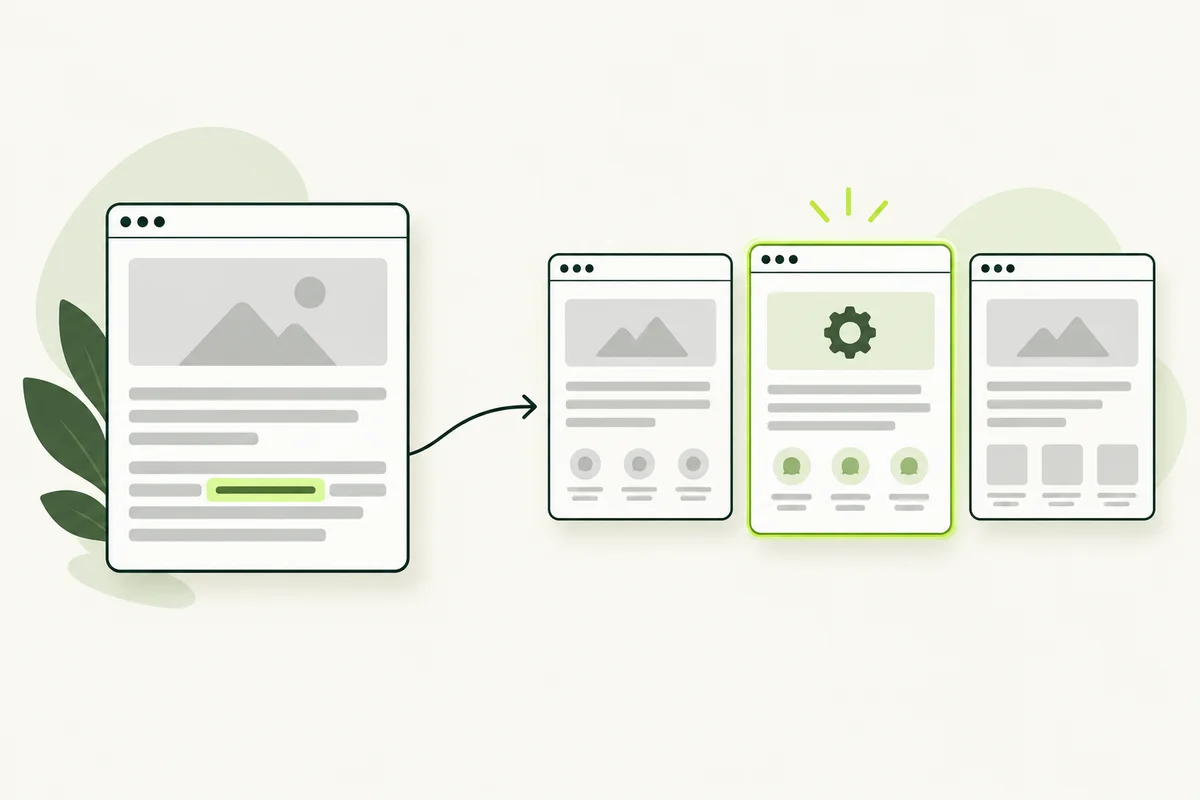
When someone follows a backlink, the page they reach should answer the question that prompted the click. Sometimes that is your homepage. Often it is a specific service page or a guide. Choosing the destination starts with understanding the reference.
Review your pages before the campaign begins, and confirm which publishing decisions the provider handles.
Start with the promise made by the reference
Write down what the article is referring to. Is it introducing the business, mentioning a specific service or pointing to an explanation? The destination should support that reference without making the visitor guess where to go next.
For example, a office relocation company, a general company introduction could reasonably lead to the homepage. A reference to packing fragile equipment might be better served by a detailed preparation guide. A reference to commercial moving services could lead to the relevant service page.
Compare the main page types
- Homepage: useful for a broad introduction to the business and its main offerings.
- Service or product page: useful when the reference concerns a specific offer.
- Guide: useful when readers need an explanation before making a decision.
- Contact page: useful when the reference clearly promises a way to enquire.
No page type is automatically the best choice for every link. Use the context and the visitor’s likely question. Our search intent guide provides a way to think about learning, comparing and taking action.
Check the page before sharing its address
Read the opening section on a phone. A new visitor should understand the offer or topic, who it is for and any important limitations. Check whether the content answers the reference clearly rather than relying on familiarity with your business.
Confirm that enquiry links work, that contact information is current and that relevant service areas are accurate. A backlink cannot supply details missing from the page it points to.
Use a stable public URL
Avoid sharing preview addresses, administrator links or temporary campaign versions when a stable public page exists. Ask your developer which URL should represent the content if several addresses display the same page. Our canonical URL guide explains that situation.
If a redesign is planned, agree the destination before placements are prepared. Keep a record of the old and new addresses when pages move so that existing references can be considered during migration.
Keep a small destination inventory
For each proposed destination, record the URL, its purpose, the offer it supports and any outstanding fixes. This gives your team something concrete to review. It also helps distinguish a missing landing page from a page that simply needs clearer content.
Use your keyword map to check that the destination has a distinct role. Do not create near-identical pages solely to provide more addresses for a campaign.
Review the complete journey
Read the reference, follow the link and try the next useful action. Note any mismatch between what you expected and what appeared. Google’s link guidance connects clear wording with the destination’s meaning. Treat both as part of the same visitor experience.